Showing posts with label video games. Show all posts

Thursday, August 2, 2007

Do Video Game Opponents Just Suck?

Just in case you haven’t heard, anti video game protesters say, “video games will rot your brain!” Is that what they said about automobiles, Jazz and Rock n roll? Video games are just anther brain rotter to add to the list, regardless of the benefits it offers.

The force behind the rot is due to the discovery of a sex scene in some games which is only accessible if you hack the game… which of course is much more important than say the total count of how many zombies a player shoots up. Zombies have feelings and are people too…dead but they’re still people nevertheless.

The ‘give it a rest’ opponent believe video games can help prepare kids for the world they will end up working and living in. Video game fan Robert Florio who just happens to be paralyzed from the neck down is currently earning his bachelors degree in Videogame Art and Design with ambitions in creating My goal is to videogames for people with physical limitations.


Walter Reed Army Medical Center uses video games as a means of therapy for recovering soldiers. Chuck Ziegenfuss, a major in the Army and wounded in Iraq in 2005 said playing video games "gives them back a sense that they're normal," he said.

Today’s games force players to learn complex rule systems, follow shifting game environments in real time and prioritize between multiple objectives. Rules, decisions, thinking fast on your feet and being a team player are precisely the sorts of skills that employees need in the workplace.

What about the claims that violent video games lead to violent behavior? According to a variety of surveys today’s kids are less violent not more. Video Game Voters Network provides detailed information on the controversy of violence ad video games. Much of their information is provided and based on University studies, professional researcher documentation and healthcare reports. All of which prove that each and every one of us is responsible for our own actions.


Groups like Mothers Against Videogame Addiction and Violence say they are educating parents of “the world's fastest growing addiction and the most reckless endangerment of children today.

Last time I checked (and I surf the web on a daily basis) I found that the fastest growing addiction for kids have always included:
  • Fast Food / obesity
  • Tobacco
  • Drugs
  • Alcohol
  • Body image related addictions

I can not recall one article or news source listing video games as an "addition" let alone the “world's fastest growing addiction.”

MAVAV Articles include:
EverQuest: A Threat to Society?
Truth - EverQuest: Explore a realm of Adventure, Fantasy and Magic.

Oh yea….. Hordes of teenagers are threatening the existence of dragons world wide due to EverQuest. Stop the innocent killing of dragons!

Video Game Networks or Online Training Camps?

FOR EVIL! {baahaahaahaa}
Jeti Force: “you can stay up as late as you like and eat all the chocolate ice cream you want.”

E3: Evil Entertainment Expo
Truth - E3: The Electronic Entertainment Expo(E3) is the world's largest annual video game and entertainment industry conference where developers and journalists gather to witness the very latest games and technologies. This is where the iPhone was premiered...

Okay… that was a bad example maybe E3 is a little bit evil but so are a lot of industries… we don’t Mothers Against Videogames protesting cell phone use in their cars while driving. Lets see their driving records! I bet they’re not so spotless.

I have to wonder how many of those who attack these video games have spent much time trying to play them? Do they realize how hard they can be? Maybe they do realize how hard the games are and they just really suck at it…

Hot Markets Hot Careers

Wednesday, May 30, 2007

It’s Not Space Aliens, But It’s A Blast

Cigna Corp. (Health & Life Insurance) said on May 30th, 2007 that it will offer HopeLab's access to "Re-Mission" the video game. The game features a teen appropriate sexy Roxxi nanobot with a blaster for her left arm and glides through the bodies of fictional cancer patients with her singular purpose of blasting cancer cells out of existence. Along the way, Roxxi also battles dangerous infections and manages side effects associated with cancer and cancer treatments. As you can read, the video game is to set to help teen cancer patients deal with their disease and help them visualize the destruction of cancerous cells.

Since the game's launch early last year, HopeLab said it has delivered 76,000 copies of "Re-Mission" which is available on disc or via download on its Web site. Cigna's will also offer the game on their website.


Pam Omidyar, a medical researcher launched HopeLab in 2001 to improve the health and possibilities of recovery for young people – and she did it with a mix of quality science and fun technology. HopeLab, a Northern California-based nonprofit organization, teamed with video game developers and animators and a medical specialist as well as young patients, in developing a quality video game that would educate as well as entertain.

Medical experts say that teenage cancer patients face unique challenges that adults do not always encounter. They are old enough to be responsible for their treatment, but may be too young to understand the potentially deadly consequences of skipping a required medication dosage.


HopeLab tested "Re-Mission" in a randomized, controlled trial of 375 male and female cancer patients aged 13 to 29, in the United States, Canada and Australia. The "Re-Mission" players maintained levels of chemotherapy in their blood and showed higher rates of antibiotic use than those in the control group, indicating that the game helped patients maintain they’re cancer therapy routine. It also demonstrates that the game is helping to instill confidence that the disease can be fought and encourages consistent implementation with their treatment.

Next on HopeLab's list: Obesity

Thursday, March 22, 2007

Video Game Exercise

Why haven’t better video games infused exercise equipment been developed yet? The very simple Dance Dance Revolution is a great introduction, but the novelty soon wears off. Game/exercise devices fall into two categories: overly expensive exercise machines with sucky games or games with amateur like exercise machines / gear.

Video games are a multi billion dollar industry looking for new ways to entice gamers and potential new gamers. Video games becoming part of the exercise routine in gyms and homes would transform gyms into new fashionable arcades.

Companies have offered gym equipment particularly stationary bikes with virtual-reality capability for years. But these days, fitness equipment executives are becoming more confident with new graphic capabilities. The increasing need to get people off the couch are helping to build a new path of sales for both the fitness industry as well as video game industry.

One company in Hawaii has developed a surf simulator that is said to be great for balance, coordination and exercise. Both children and adults can surf the world's first patented indoor video surf simulator. The game is based on balance as you stand on a genuine, hand made, fiberglass competition shaped board and surf 30 foot video waves.

Video Game Tester Jobs

Friday, March 16, 2007

How Can Video Games Be Good For Kids!?

Video games received a lot of negative press since they have become so popular. They have a reputation of creating killers kids, teenagers, and sometimes even grown adults.

While they may have influence in the mainstream society, it's time for video games to get some positive credit for their good aspects. Gamers are happily voicing the positive and exciting ways that video games are helping people.

It’s said that the skills needed to play games are similar to the skills needed to perform an examination surgery of the internal organs of the abdomen using a laparoscope aka laparoscopic surgery.

In a relatively unheard of study recently published within the medical community, surgeons who at one time in their lives played up to 3 hours of video games a week made 37% fewer errors in the simulated laparoscopic surgeries performed during the study.

They were faster and better overall than the other surgeons who played less than 3 hours or none at all. This is not a perfect study but it is definitely an exciting development that will be followed by researchers for further possibilities.

Another study which is currently being performed is using Virtual Reality Therapy with soldiers that suffer from post-traumatic stress disorder (PTSD). It is estimated that more than 20% of American soldiers who have returned from Iraq suffer with PTSD.

A game that has been created and modified from the Xbox game, Full Spectrum Warrior, is being used to help soldiers face their fears with similar landscapes, scenes, and even smells that resemble what they experienced in the Middle East. One female soldier that has completed this form of therapy has continued to see improvements three months after receiving the therapy. The psychologist that has created this therapy is not making any grand claims at this point but is very hopeful for continued future success.

Another way that video games are beneficial is in fitness. A Canadian fitness company is now hooking interactive games up to exercise machines.

This facility is geared specifically toward teens. You can pedal and steer your way into victory against friends through playing the game on your stationary bike. The bike is connected to a biking PlayStation game and the pedals and handlebars give you movement and steering in the game. This is a truly inventive way to merge teenagers' love for video games with physical activity.

The resistance to video games is nothing but the continuing conflict between generations. In the 1940’s to 1950’s, rock ’n’ roll was thought to have a clearly negative influence. Parents, preachers and politicians all thought it changed young people in to lazy mindless zombies. According to one U.S. preacher, rock and roll turned kids into “devil worshippers” who defied both the law and common decency. Elvis’s dancing was considered sacrilegious to the human movement.

Jazz, novels, comic books, movies and even the waltz were criticized as corrupting influences that would dull the minds of young people. However, I think we can all agree those influences weren’t so bad.

When used with a want of positive results, Video games can allow for creativity and individualism. A game can allow a player to see how events can happen differently and for what reasons.

Children and teenagers use popular culture to deal with escalating stress at school and home. Advertisers constantly focus what many people consider inappropriate ads to young consumers, yet they receive less than half the grief that video games do.

It doesn’t take a lot of insight to recognize that the modern public educational system is crumbling. Fresh ideas and computer involvement is needed. Video games is a talent that could be fully developed using traditional textbooks and instructions. More and more studies are showing that video games can have positive effects. Some public school have already begun experimental programs utilizing computers with instant success. Therefore, the advance of video games into classroom education, is not only unavoidable; it is necessary.

Video Game Tester Jobs

These boots were made for walking
Help support me in the Walk America event.

Wednesday, March 14, 2007

At Home With Games

Yahoo News

More than one-third of U.S. adults who go online own a video game console and 16 percent own a portable gaming device. Among the top three gaming heavyweights -- Sony, Nintendo, and Microsoft -- Nintendo leads the pack of the most Web traffic growth over the past year, likely due to the success of Nintendo's new Wii console.

Unique visitors to Nintendo.com increased 91 percent, from February 2006 to February 2007. Xbox.com also saw significant year-over-year growth in February, increasing 47 percent. The numbers show a shift that will most likely position the gaming console against the PC and TV as the entertainment source for the entire family. Both Microsoft and Sony are pushing their Xbox 360 and PlayStation 3 consoles as multimedia hubs for gaming, watching movies, and viewing pictures.

IBM announced on Monday that it is beginning production of a 65-nanometer version of its Cell Broadband Engine, the multicore chip that powers the graphics processing of the Sony PlayStation 3. Among other things, the chip has nine processors with a top clock speed of over 4 GHz, and can operate multiple operating systems at the same time. The announcement this week by IBM that it is shrinking the size of the Cell chip by more than 25 percent raises the possibility that the cost of the PlayStation 3 might come down. The smaller Cell will use less power than its 90-nanometer predecessor and should cost less.

Microsoft announced that its Live online service will be extended to PC users in May, broadening its reach beyond the Xbox 360 console gamers now using Live. The PC version of Live will launch with a version of "Halo 2," a popular game featuring alien battles, and will be geared for Windows Vista.

A few months later, Microsoft Game Studios is scheduled to release a title, called "Shadowrun," that will encourage competition between Xbox 360 and PC players.

Product Development

Tuesday, March 13, 2007

Video Game Tester Jobs

Full Time Company Game Tester - The nirvana of video game testing. Here is a look at the different types of video game tester jobs that are available.

Monday, March 12, 2007

Movie Theater Offer Interactive Video Games To Fight Declining Ticket Sales?

Edited by Danielle Shriver

Let’s face it. Movie theaters aren’t as appealing now that prices are so unreasonably high. Combined with low quality films the reasons to attend a movie theater have hit an all-time low. Movie theaters have made subtle changes to theaters in an effort to entice audiences. Such as larger screens, comfortable chairs, and surround sound. There is also dining available in the lobby of some theaters. But the cons outweigh the pros and patrons walk away feeling like the experience was unsatisfactory. What else could they offer people to increase attendance?

Video games! CineGames in Spain has created a new concept of pre-movie entertainment by bringing gaming into theaters with black lights, flashing green lasers, vibrating seats, and 17- inch screens attached to individual chairs. There is a hybrid theater in Madrid, Spain has all the excitement of an arcade and the classic feel of the true cinema experience. Enrique Martinez of CineGames developed the idea as part of an executive MBA program at the Instituto de Empresa in Madrid. "We see the future with multiplexes with five screens, one for the traditional Hollywood spectaculars and the others for screens for video halls and 3-D. That’s the next step." The Yelmo Cineplex aims to expand the concept throughout Europe and into North America by allowing other theater companies to use the system. CinemaxX, one of the top movie exhibition chains in Germany, carried out a four-month trial with this innovative idea on one of its screens in Essen last year with success.

Time Play Entertainment in Toronto, Canada is also developing theater technology that would allow moviegoers to play up to twenty minutes of interactive, ad-sponsored games before the start of movies. They will offer packages that allow movie theaters to retrofit their screens so patrons can bide their time before a movie starts. With the new video game system, moviegoers can play on small individual touch-screen devices that will allow audience members to interact with one another, or individually. Ultimately, Time Play Entertainment wants to develop a system that opens up screens for a wide variety of uses, from popular games as basic as bingo to online computer role-playing games in a virtual world. We can only wait in anticipation for the day when it is available at our local Cineplex’s in the States.

Yelmo Cineplex is now trying to develop an educational arm that would rent out the hall to schools that could use the system for learning and testing. In addition to pre movie entertainment the theater is busily organizing game tournaments for Manga video games and Pro Evolution Soccer, a popular soccer game produced by Electronic Arts. This should not only help boost ticket sales, but also make us, the moviegoers, and a happy bunch.

If movie executives and shareholders want to return customers they need to pick up a similar technique, and fast. Especially since ticket prices have continued rising while movie quality has been going down. Remember Snakes On a Plane? Video games could be incorporated into the movie experience to entice audiences to come back for the whopping fourteen-dollar entrance price. American movie theaters should upgrade the movie experience with more than leather seats and cup holders. It’s only a matter of time until we see theaters remodeling their spots with snazzy pre-movie entertainment like Spain and Canada.

Be proactive - take responsibility for your own success

Friday, March 9, 2007

Three Best Video Games In A Movie Plotlines

Long before it became standard practice to turn every video game into a movie, the video game’s place in a film was more of an object of curiosity then a mere marketing tie-in. In film, the ability to control the GUI (Graphical User Interface) tapped into fears of a machine-dominated world or fantasies of being whisked away to a far off future to save the universe.

I’ve come up with a list of what I considered the best in-movie video games plotlines. If you can add to it, please do.

Wargames (1983)

A high school student whose gaming addiction caused his grades to suffer and like any good gamer, he hacks into his school system to change his marks. Somehow, changing his grades leads him to a super-secret government program that oversees nuke launches. Thinking it’s just RISK Online, he nearly starts World War III due to a poorly-guarded Firewall / gate keeping program.

The Last Starfighter

One of my all time movie favorites

Alex lives in the boonies with nothing to do but get drunk, have sex and play video games. What else does a good game geek do? The trailer-park teen spends his days battling Space Invaders by means of an arcade game. My kind of guy! Little does our hero know, the game is actually an intergalactic recruiting device used to find the best and brightest starfighters for nothing less than saving the universe.

When Alex hits the intergalactic Top Score, there’s no one around to congratulates him. Soon after, an independent contactor for the intergalactic recruiting video machine arrives to enlist him for the purposes of battling the evil Kur and the Ko-Dan armada.

Tron

Definitely one of my top twenty all time favorite movies

Time hasn’t changed too much. The kids of the parents who were scared of their kids getting too sucked up into games are now the parents of the kids who are sucked into today’s games. Tron took the 80’s fear to the literal extreme. The death of in-game characters brings back memories of frustrations and dry tears over the death of characters developed over weeks of game play and the unnatural bonds we formed with them.

Jeff Bridges, gets sucked into his character’s neon-colored game world where he and a security program (the aptly-named Tron) must race bikes, navigate through mazes, and throw discs at square beasts just so that he can escape but to his own world.

More Than Just Fun And Games


Thursday, March 8, 2007

Mind Games

Hasn’t there been at least a couple of times you wished you had the power to move things with your mind? However no matter how hard you concentrated the person in front of you kept talking relentlessly. Gamers will soon be given the power to move things with their minds…in a game world at least.

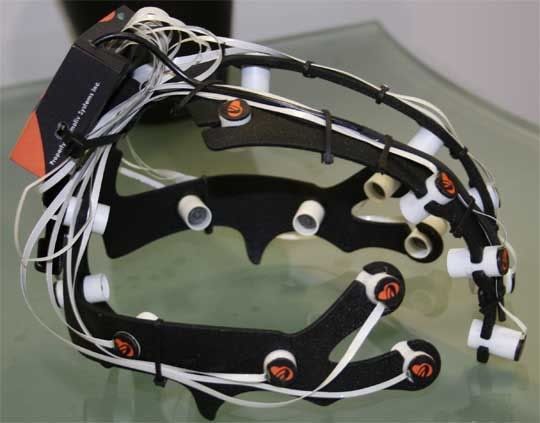
Emotiv Systems has developed a neural-processing technology that lets players control game environments with their minds alone. Sensors in the helmet pick up on electric signals from the brain. The system software analyzes the signals and then wirelessly relays what it detects to a receiver, which is plugged into the USB port of a game console or PC.

Just as motion control has opened up a whole new world of interaction and gaming experiences, so could thought control gaming lead to a whole new host of innovative titles such a Drunk Auto Theft or Who Will Be The Next American Jedi?


The prototype device looks sort of like a smaller version of Professor X’s Cerebro and is designed to take video games to the next level. As with handwriting or voice recognition, the machine itself has a learning curve, improving as it better understands what the player is thinking, but there is also a skill level involving visualization on the part of the gamer.

The system seems to work best with children and those open to believing in their capability, according to Randy Breen, Emotiv's chief product officer.

"We have had a number of kids try the equipment, and they often get the best results right away," Breen said. "Part of that is because the kid doesn't have the same kind of barriers as an adult does. Lots of kids can fantasize about moving a cup and believe it."

Adults, on the other hand, are more restrictive in their thinking and therefore have a obstacle to believing that they can do something out of the ordinary, Breen said.

I have to admit that I find it amusing that Emotiv Systems has focused they’re first mind control product for gamers instead of some nobler cause such as helping quadriplegics or even enabling us to translate cat thoughts. I for one would love to know why they choose to sit on the laps of people who are allergic to them.

Cats thoughts will have to wait as Emotiv is not yet ready to announce any partnerships. However they did announce that they are developing its technology for use in other industries, including medicine, security, market research, and interactive television.

Nowadays everybody is talking about Xbox and Nintendo Wii’s revolutionary controller, but what may be on everybody’s mind in the near future is the Emotiv System. However… lets not get too carried away, the last thing I want is a Demolition Man kind of Vir-Sex.

Friday, March 2, 2007

Study shows that killer games do not make killer kids.

University of Southern California sociologist Karen Sternheimer, has been researching the possibility of the missing link between video game violence and kids since 1999. She said blaming video games for youth violence fails to take into account other major factors.

"A symphony of events controls violence," said Sternheimer, who began her research after experts blamed the video game "Doom" for the gun rampage at Columbine High School in Colorado in which two students killed 13 people and then themselves.

"It was a tragic and, very fortunately, rare event and it was discouraging to see that the conversation often started and stopped at video games."

Sternheimer's article, "Do Video Games Kill?," will appear in the American Sociological Association's Contexts magazine as the European Union weighs outlawing certain violent games and harmonizing national penalties for retailers caught such products to under-age children.

Her research, involved studying media coverage and FBI statistics detailing trends on youth crime, found that in the 10 years after the release of "Doom" -- and other violence targeted titles -- juvenile homicide arrest rates in the United States fell 77 percent.

In addition, Sternheimer found that students have less than a 7 in 10 million chance of being killed at school. “If we want to understand why young become homicidal, we need to look beyond the games they play or we miss some of the biggest pieces of the puzzle," she said. Karen Sternheimer lists other factors such as community and family violence and less parental involvement as other possible factors.

Sternheimer said violent video games have come to carry the baggage of social angst over youth violence as the industry has grown into a $10 billion-plus giant that towers over Hollywood box office sales. Blaming video games is a quick fix for when the public demands an explanation for why children become murderers.

In the US, the video game industry is self-regulated and retailers have the deciding factor whether or not to sell a video game. Due to demands from concerned consumers, the industry has given combat video games an age appropriate grade. An M-rated game is intended for mature audiences. These games contain content judged appropriate for people aged 17 and older. However, if is up to the buyer / parent on whether or not to buy the game for a child.

Putting the blame on video games gives a false impression that society should forgive the environment in which the child was raised and removes the responsibility of the criminal. However, youth criminal activity is more complicated than any video game and there is no one simple solution to answering why do kids kill?


Teaching in the Juvenile Justice System


More Than Just Fun And Games


Video games good teachers?

Source: Researchers weigh in on value of digital lessons

Tired of badgering the kids to quit wasting time with those computer and video games and get started on homework? Here's a news flash for the 21st Century: It turns out many of the games might be better than homework.

In a series of research projects as likely to thrill young people as they are to horrify their parents and teachers, academic experts across the country are unearthing educational benefits in the digital games that surveys show are now played by more than 80 percent of American young people aged 8 - 18.

At the top of the experts' lists are simulation and role-playing games, often played on the Internet alongside thousands of other participants, because of the vocabulary, reasoning and social skills they can boost. But even some of the most violent games, such as the notorious Grand Theft Auto, have some valuable lessons to teach in the right circumstances, researchers are finding.

Replacing rote memorization |

Some researchers even suggest supplanting much of the traditional back-to-basics K-12 curriculum with a new generation of game-based materials to capture the increasingly short attention spans of today's youth.

"Right now, in American schools, we spend most of the first six or seven years of math education teaching kids to do what a 99-cent calculator does," said David Williamson Shaffer, an education professor at the University of Wisconsin-Madison and author of a recent book, "How Computer Games Help Children Learn."

"We have this view that schooling is the natural and inevitable way to get kids ready for life in the world," said Shaffer, a leader in the field of digital learning. "But it shouldn't come as a surprise that when our economy has changed, when innovation and creativity are much more important than rote memorization, that the system needs some real updating to train kids how to use computer games to solve problems in the real world."

"We realized that over 80 percent of American kids have game consoles at home, 90 percent of kids are online and 50 percent of them are producing things online, so we really need to understand what is going on here," said Constance Yowell, director of the MacArthur Foundation's digital research initiative.

"This is what kids are doing, so we need to know both the positive benefits and the unintended consequences."

Simulation games in particular have already been embraced by some educators, as well as many businesses and the U.S. military, as effective ways to introduce people to environments and situations that would otherwise be too expensive, dangerous or impossible to gain access to.

The computer games and tools being studied are generations removed from the static, linear educational software commonly found inside many of the nation's schools today -- software that girls and boys quickly master and then discard as boring.

"There are a lot of terrible educational games out there, where you have to do something un-fun, like solve five math problems, so you can do something fun, like play a game," said Ben Stokes, a games expert at the MacArthur Foundation.

Instead, the experts are interested in the educational benefits of commercially available games that were not expressly designed for school use -- simulation games like Zoo Tycoon, in which elementary school-age children build virtual zoos by selecting animals, creating appropriate habitats, managing food budgets and even setting the prices of popcorn at the concession stands.

The verdict on the potential benefits of computer and video games is not unanimous, however. Some critics worry about the persistent racial and economic gaps in access to computers and the Internet: 60 percent of white households, but only 36 percent of black households, had Internet access at home in 2003, according to the Census Bureau.

"The only thing we know for sure is that video games are effective at desensitizing people to extreme violence," said Edward Miller, a senior researcher at the Alliance for Childhood, a nonprofit child advocacy group. "There is no evidence that video games are good at teaching problem-solving or collaboration or the other higher-order skills that these proponents are claiming."


More Than Just Fun And Games


Chases linked to video games

Source: Pursuits: Police say speed, testosterone and cars are lethal

A "lethal cocktail" of testosterone, powerful cars and the influence of video games is being blamed for youths attempting deadly high speed getaway attempts.

On February 5, Rotorua 14-year-old Pehi Tahana was killed after he lost control of the stolen car he was driving. He was being chased by police after he took off from a Papamoa service station without paying for petrol.

On Tuesday afternoon three youths being pursued on State Highway 30, east of Rotorua, crashed head-on into a car carrying a family.


"It was only through the grace of God that someone was not killed in that crash," said Rotorua police area commander Inspector Bruce Horne.

He blamed a "lethal cocktail" of testosterone, the cheapness and availability of high powered vehicles, and the boy racer culture for the increasing number of high speed fatalities. Part of the culture was influenced by video games like Grand Theft Auto and Need for Speed.

"It's not just the games but TV as well," Mr Horne said. "There's been a lot of research on it, but young men driving fast is not a new issue.

"You can go back decades and still find cases of young guys inclined to take risks. The difference between then and now is that they did not have the fast cars available to them."

The problem was not restricted to Rotorua and was happening because young men were frequently speeding recklessly, regardless of whether they were being chased, he said.

Acting Bay of Plenty road policing manager Inspector Ed Van Den Broek said that if people tried to flee from the police it was usually because they had something to hide.

"The car may be stolen or they may have stolen property or illicit drugs inside."

"The thing we have noticed is that the people who try and run from us have very poor driving skills.

"I have yet to be involved in a pursuit where I have thought, 'Gosh, that was good driving by the guy we were chasing' ... They [drivers] think they are 10-foot tall and bullet proof."

Gareth Schott, who lectures in games studies and media psychology at Waikato University, said while people frequently blamed video games for things like car chases, there was not a lot of research on the subject.

He was about to begin a two-year research project investigating the issue, which would include interviews with youths to find out to what degree their behaviour was influenced by games.

"Most of the research that has been done has a very poor understanding of [video] games and ... is inconclusive."

It was also difficult to isolate games as the major influence, given the wide variety of media in teenagers' lives such as film, television and the YouTube internet site.

"Years ago people were asking the same questions of comic books, saying they were immoral and having a bad influence on the kids, even what we now regard as fairly harmless stuff like Superman.

"People underestimate how media-literate young people are. Even very young children have a very sophisticated understanding of what they are watching."

Meanwhile, two Rotorua 16-year-olds were found in a stolen car during a routine stop by police last night in Union St about 11.30pm. Senior Sergeant Scott Fraser said one of the youths was appearing in the Rotorua Youth Court this morning charged with unlawfully taking a vehicle.

Beating violence to the punch

Source: Hurley School takes proactive approach to preventing the problem

Globe Staff Writer

HURLEY -- Violence is infiltrating our schools, and the video game industry and television are major contributors to that aggressive behavior, according to a national speaker on school violence.

With no violent acts at the Hurley School to date, school officials are taking a pro-active approach to the problem.

"It is preventable. It is treatable," said fourth grade teacher Ronda Olkonen, who attended a Student Media Awareness Reduction Training conference in Escanaba presented by Lt. Col. Dave Grossman of Jonesboro, Ark.

Fourth grade teacher Monica Kolpin and second grade teacher Michelle Santini also attended the SMART session.

A leading expert in the study of school violence, Grossman will be at the Hurley School on Sunday and Monday to talk with parents and educators about the "virus" of violent crime.

On Tuesday, Grossman said he hopes his presentation will accomplish three things: Save lives, increase the quality of life and increase the quality of education.

Grossman has been presenting the Student Media Awareness Reduction Training program to schools throughout the nation.

The SMART program shows how television and video games have a detrimental effect on our youth.

Grossman said studies show those involved in the SMART program have shown enormous cuts in violence, bullying and obesity.

He talked about the brain.

Dividing it into two sections, he stressed the importance of "detoxing" students from the impacts of TV and video games, and reintroducing them to human behavior.

"The forebrain is that which makes us human -- reading, writing, arithmetic, decision making, social skills, etc. -- everything people can do that a dog cannot do," he said.

"The mid-brain brings out the animal instincts -- basic survival, fighting, reproduction," Grossman said.

"When we read, we exercise our human side. Violent visual imagery brings out our animal instincts," he said.

Grossman was in Escanaba in October. His presentation there was the start-up of the SMART program in Escanaba.

Noting that within three days, kids can be "detoxed" from the impacts TV and video games have on the brain, Grossman said after the SMART program was enacted in Escanaba, "They got a double-digit increase in test scores."

A West Point psychology professor, professor of military science and an Army Ranger, Grossman has combined his experiences to become the founder of a new field of scientific endeavor, killology.

Grossman said killology is his personal area of study. It teaches about how people in the military are taught to kill and how video games do the same.

"The military has a safeguard built in, discipline," he said. "It's being done to our children without the safeguard of discipline."

Grossman will be at the Hurley School on Sunday at 7:30 p.m. to talk with parents about media violence and its effect on children.

This session is free of charge.

He will talk with educators and other area agencies on Monday beginning at 8 a.m.

Presentations will be held in the high school auditorium.

Porn Through Video Games

Source: Porn Through Video Games

It seems some porn web sites have found another way to sneak into your home uninvited. Players say some are now coming in through video games.
Michael Gatson is a self proclaimed video gamer. He says he was shocked after recently playing a friends Nintendo Wii and porn popped up. "When we went on line, we were going to play some football when we went on a big screen like a pop up like on the internet, 'would like to see this?' and it was a young lady, very erotic."
The Nintendo Wii video game is so popular stores can't keep it on the shelves. At Replay Gameware they only had one.

Players say video gaming isn't just letting kids play ping pong. It could be letting them see porn through it's internet connection.

Cpt. Bill Duncan is with the Caddo Sheriff's Dept. "They are actually accessing Wii consoles through their sites and enticing people to come into their sites."

Gatson says, "Before we knew it we had a house full of guys and they were flipping out, I mean, they really had some hard core stuff which I don't think would be appropriate for the youngsters."
So what's a parent to do? You can begin with the games privacy controls and install some blockers, but police say nothing is more fullproof than a parents supervision.

"I'm not sure that it blocks everything and I don't think you'll find any filtering device that will block 100% of anything." Duncan says.

He goes on to say, "Parental involvement is the number one thing."

The gaming-violence connection: why society finds it comforting

Source: The gaming-violence connection: why society finds it comforting


Ars has extensively covered the attempts to legislate restrictions on violent video games and the ambiguous science that supports those efforts. An aspect of this that frequently escapes analysis is why these legislative efforts gain so much traction despite their lack of a solid scientific foundation. Writing in the journal Contexts, USC sociology lecturer Karen Sternheimer analyzes these efforts in terms of ongoing societal fears regarding the influence of media on children.

Sternheimer notes an obvious but underemphasized figure: despite the proliferation of violent, first-person shooters in the wake of Doom, juvenile homicide rates have fallen in the decade since its release. Random school shootings remain incredibly rare; for all forms of homicide, students face a seven in 10 million chance of being a victim.

Random school shootings remain so rare, in fact, that Sternheimer reports that the FBI found it impossible to generate a profile of a "typical" shooter. This leads to a number of difficulties. Linking violence to the perpetrators' background might wind up revealing aspects of the shooter's predominantly white, middle-class origin that helped foster their violence. Nobody seems interested in doing this sort of analysis, perhaps in part because much of the media belongs to that same group.